Sandro Bastioli
Born in Spoleto in 1949, Sandro Bastioli has been painting for nearly fifty years. Still life, nude, and stone: three chapters of one lifelong study of light and time.
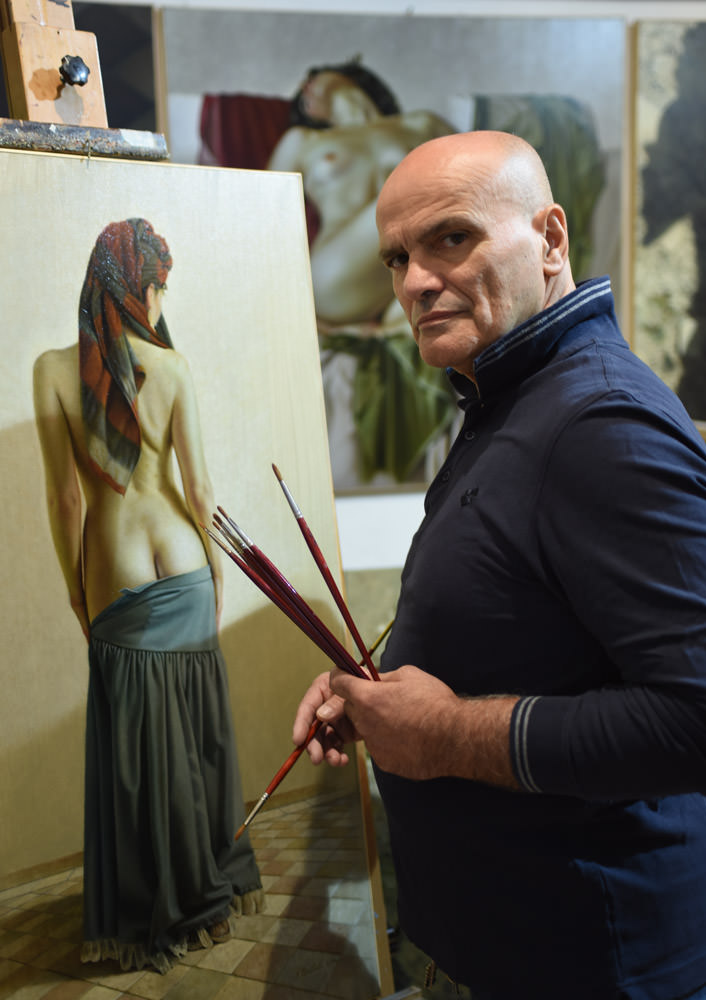
Sandro Bastioli moved to Switzerland at a young age, where he began painting as a self-taught artist. His passion for drawing had already shown itself in childhood. Back in Italy, he settled in Milan and refined his technique at the free Academy of Painting in Bovisio Masciago, under professor Cino Balleri.
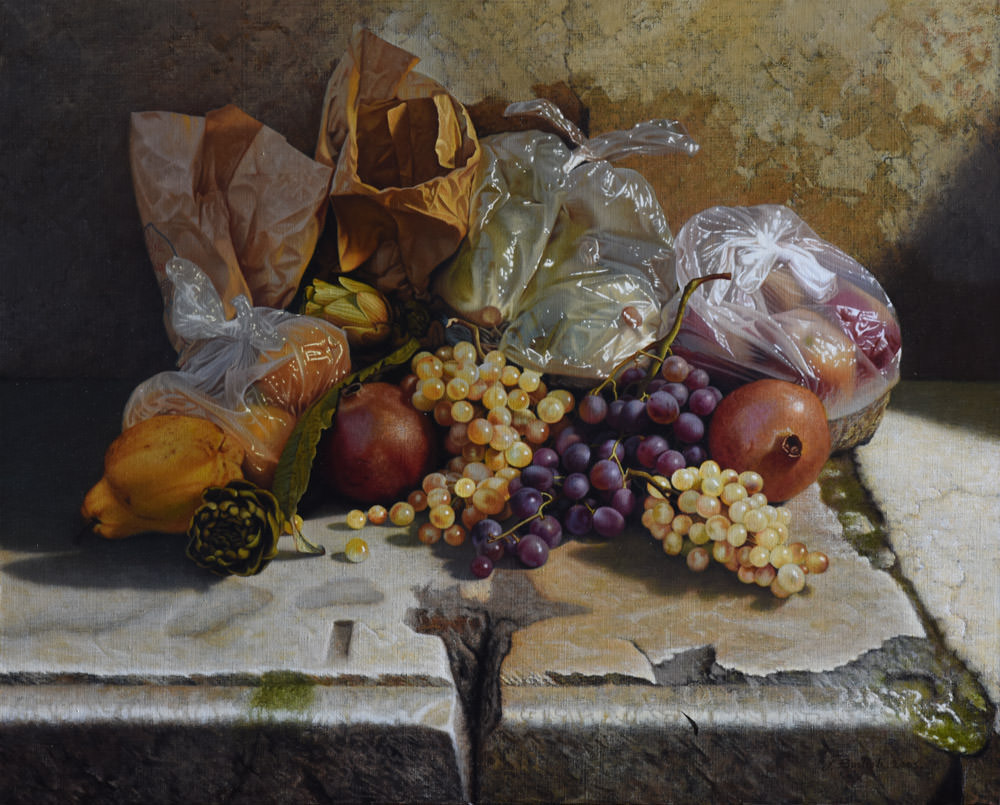
His path follows the classic stages of painting. First, the female nude, in oil and red chalk. Then, Umbrian landscapes, reproduced with meticulous precision. Finally, Caravaggio-style still life, the work that first made his name known.
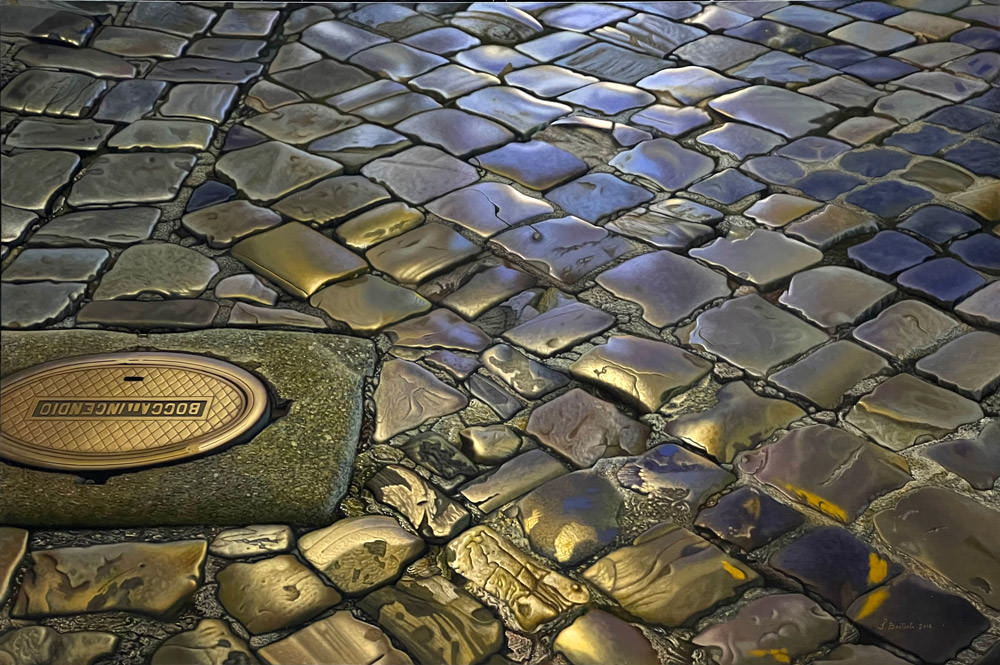
The decisive turn came between the late 1980s and early 1990s. Stone forced its way into his paintings: river-smoothed rocks, marble slabs, ancient walls. The female nudes became statues, then fragments of statues, before nearly vanishing altogether. This is how his hyperrealism was born, tempered by a classical sensibility that never left him.
In 2000, he opened the cultural season at La MaMa Gallery in New York's East Village, under founder Ellen Stewart. Solo exhibitions followed in Schwetzingen, Germany, and at the Tonne Gallery in Oslo, Norway. In 2015, his work entered the Museum of Modern Art in Spoleto, Palazzo Collicola, in a selection that earned him the cover of Artribune.
His work has been covered by Corriere dell'Umbria, La Nazione, Elle Decor, and Artribune, among others. In 2023, he received the title of Doc Italy Ambassador for Umbrian Art.
Works in private collections,
around the world.
For a long stretch of his career, Sandro Bastioli worked mainly on commission. His work is now held in private collections in Italy and abroad, including:
You can still commission a piece, with subject and timeline agreed directly with the artist. on commission
Three subjects,
one single focus.
Whether the subject is a body, a piece of fruit, or a stone, Bastioli's method stays the same: look for a long time, reproduce every imperfection, and capture the light exactly as it falls on the real surface. Photographic accuracy doesn't interest him. The patience it takes to get there does.
Still life, nude, stone: three chapters of the same study. Each one grows out of the last and moves past it, but they all share the same question. What remains of a subject once every detail has been observed to the end?